
Something Within
Pitch
As a traveller, your vehicle crashes into a mine pit, leaving you stranded in an unfamiliar environment. As you begin to explore, you realize the area has been abandoned. In order to escape, you must gather resources to restore power to the elevator, forcing you to venture deeper into the mine. However, getting out proves far more difficult than anticipated.
Project Goals
Design a introductory level experience
Creating a mysterious narrative
Design a natural environemnt with an eerie feel
Focus on environment and building a setting that feels authentic to its universe
Project breakdown
Solo 4 Weeks halftime (4hours/day)
Created using Unreal Engine 5
IWALS/AGLS template by [Name] including player movement and selected scripts.
Additional Scripts created by me
MARKETPLACE AND ASSETS USED:
IWALS/AGLS by Jakubs W
Supergrid Starter Pack by ZeOrb
Industrial Infrastructure and Modular Corridors by Sierra Division
Modular Cave by Hivemind
Tower Crane by Mellstroyroker
Overview
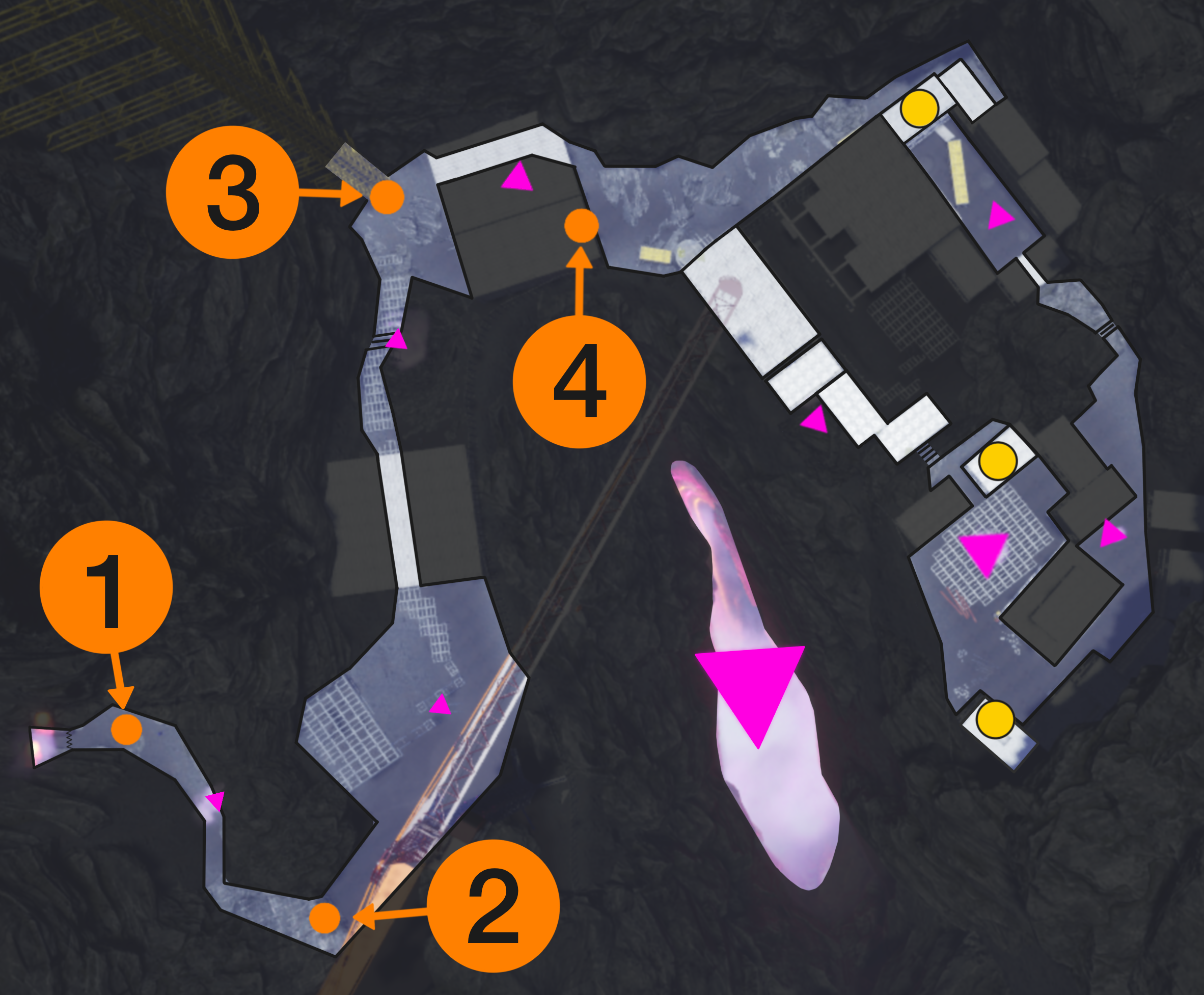
1
2
3
4
Level Start
Lookout Point
Elevator
Power Line
Level End
Hazards
Req. Pickups
Discovery
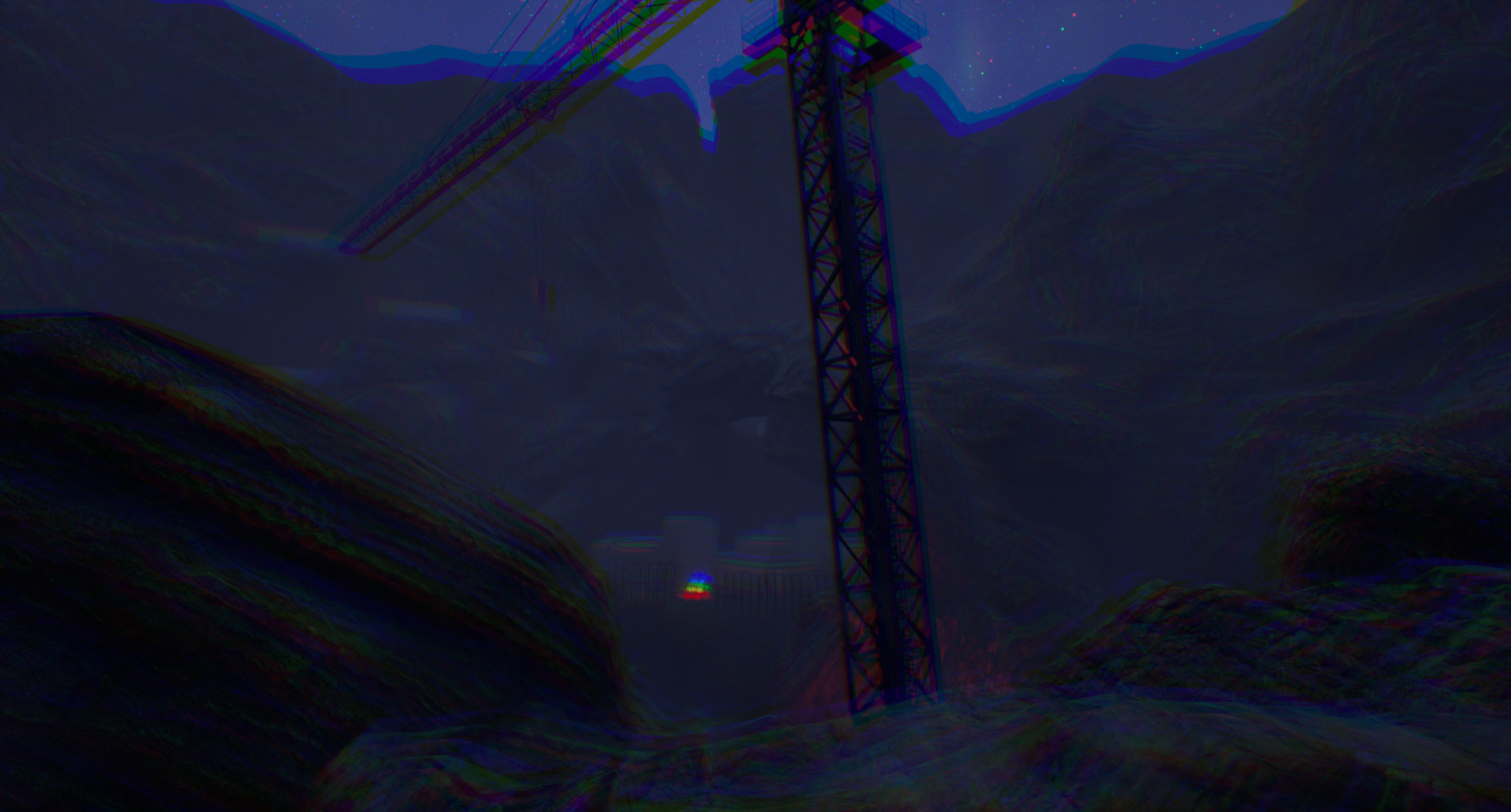
Mystery Gas
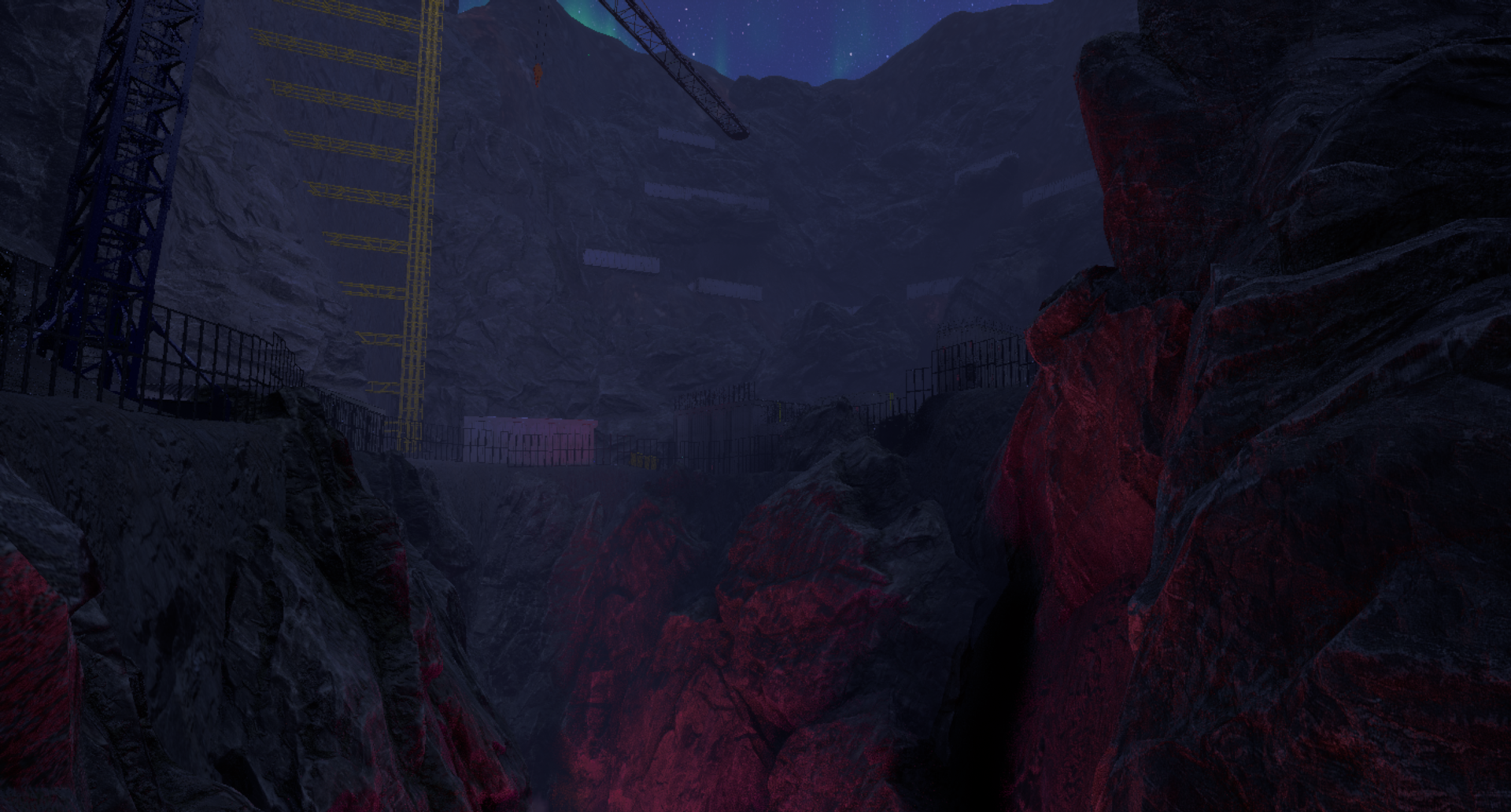
The level starts with the player just having crashed into a mine pit, immediately placing them in an unfamiliar and disorienting environment. With the vehicle destroyed the player is forced to proceed on foot, establishing a loss of safety and setting the tone for the experience.
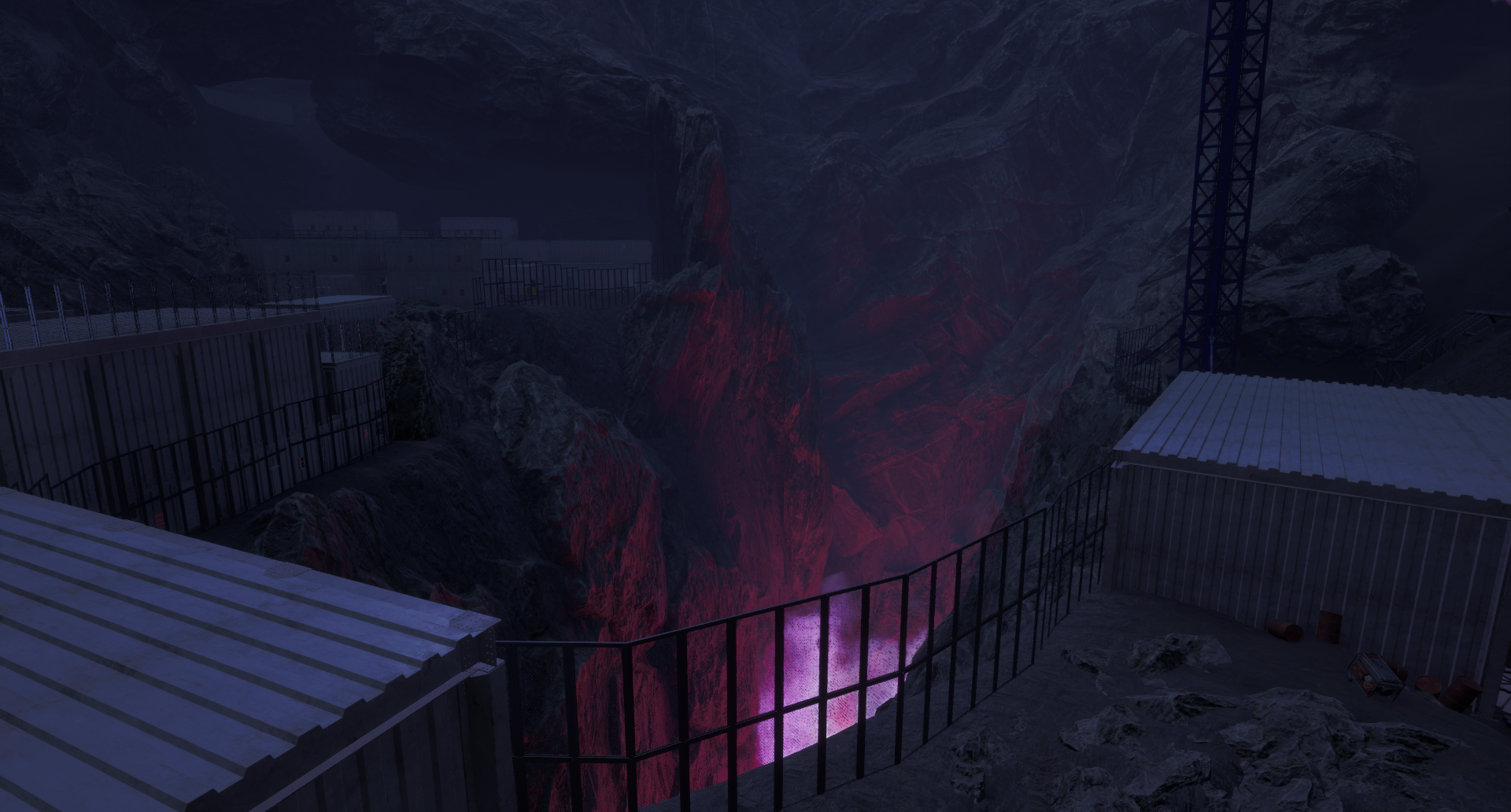
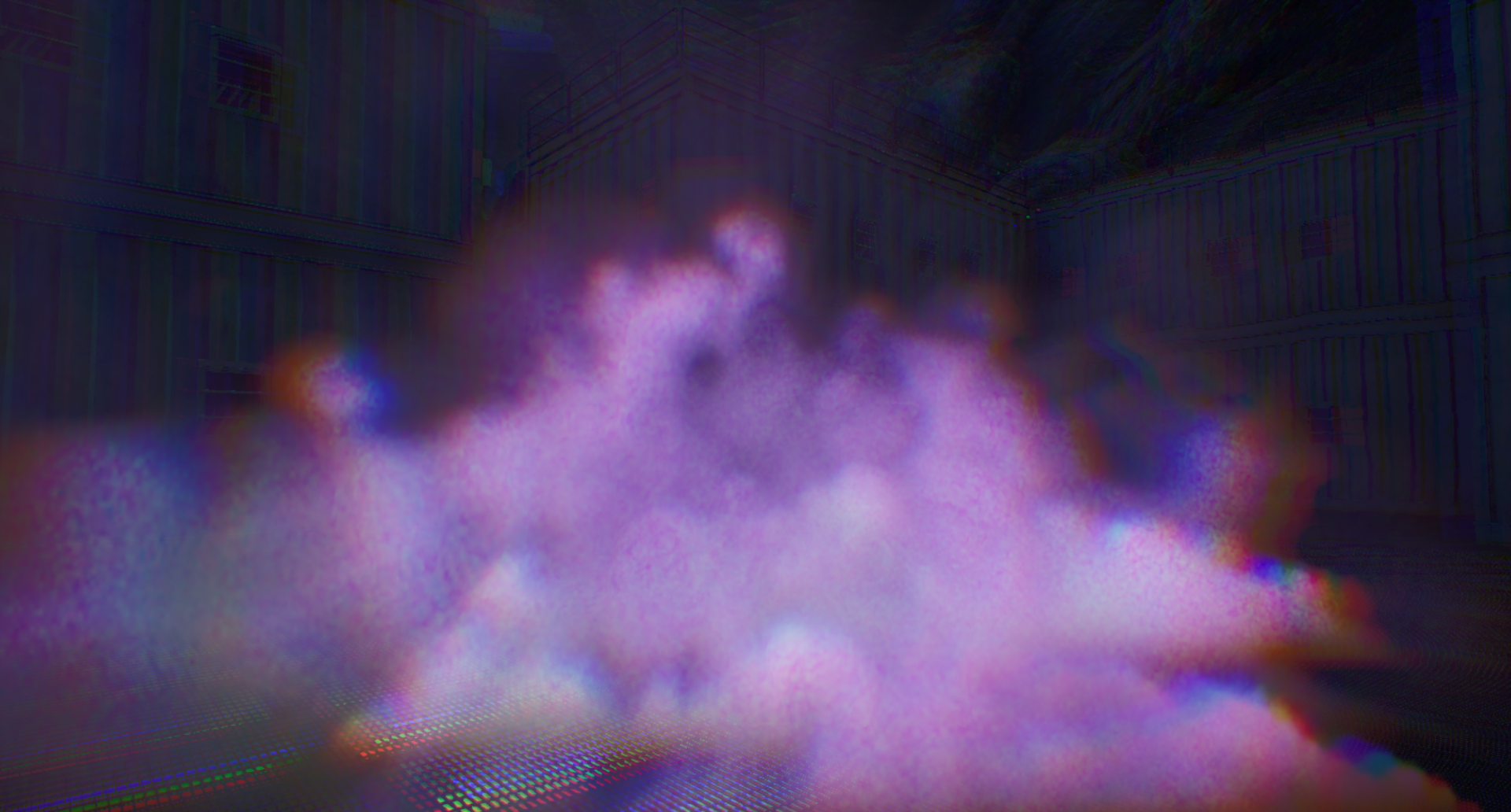
As the player navigates between rocks and boulders, the space is intentionally structured to funnel movement, guiding them through the environment while maintaining a sense of confinement. Along this path, gas is leaking from cracks, introducing an environmental hazard.
The toxic gas also contributes to atmosphere and disorientation, reinforcing the overall sense of mystery.
A way out
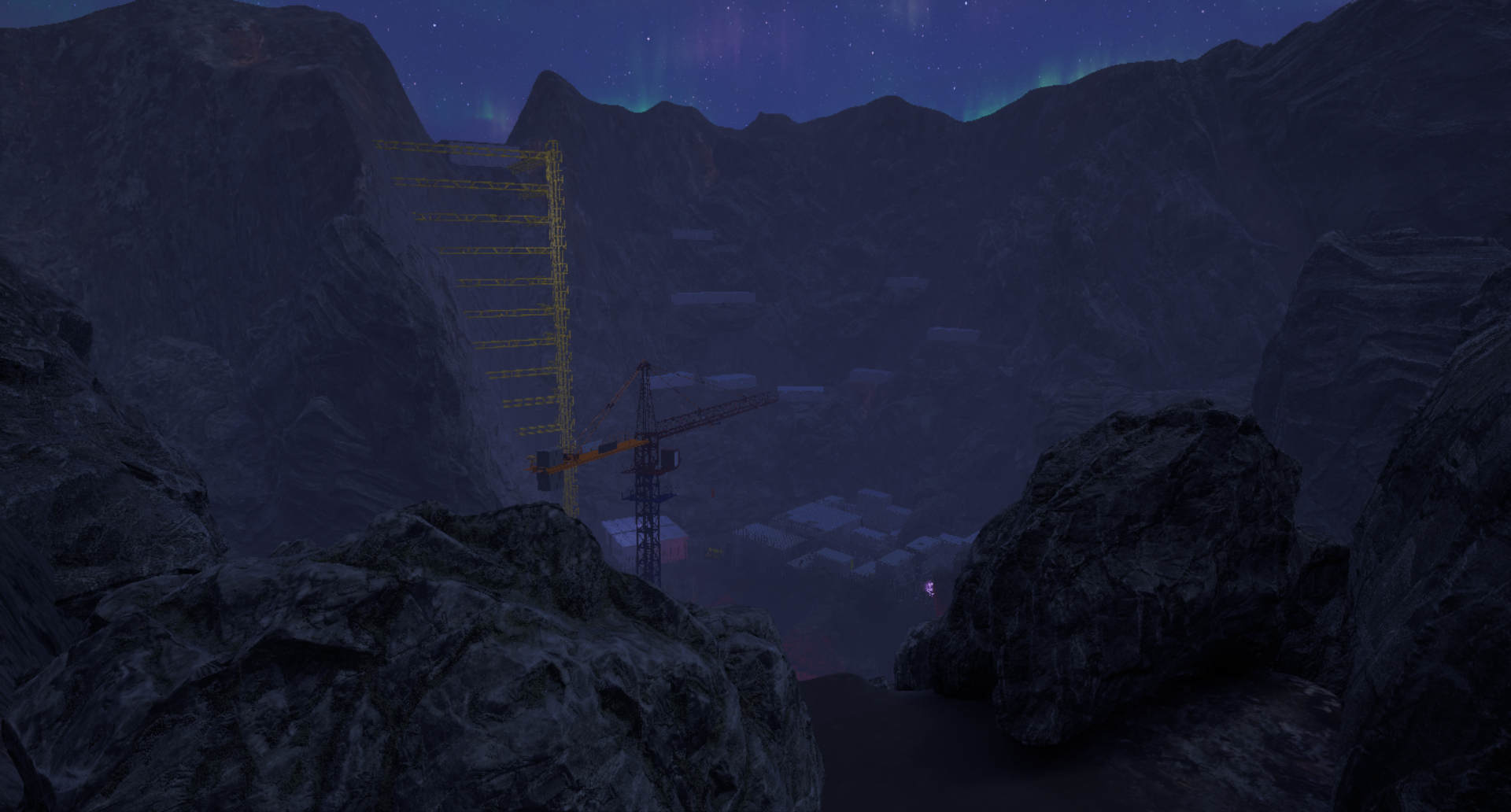
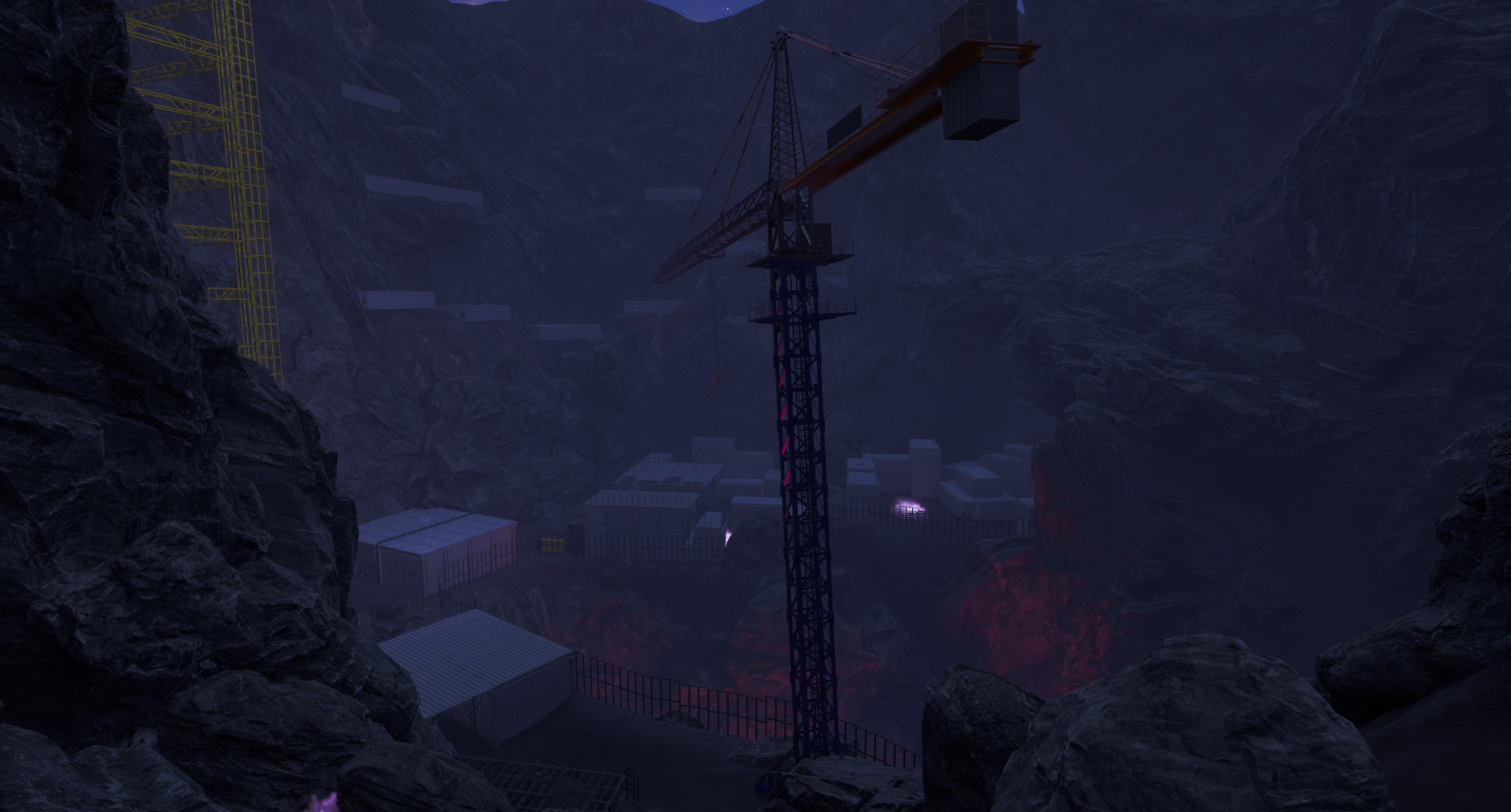
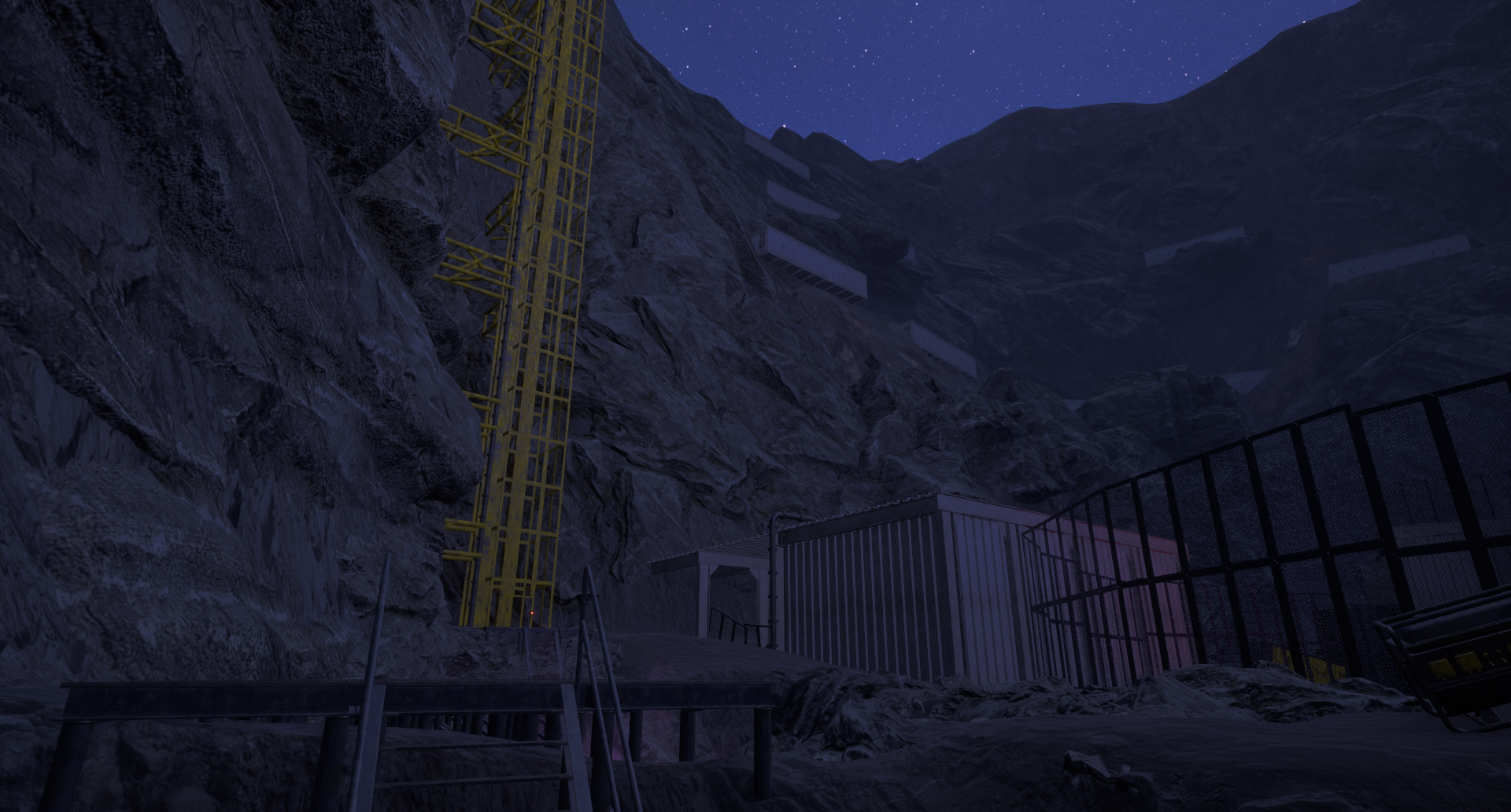
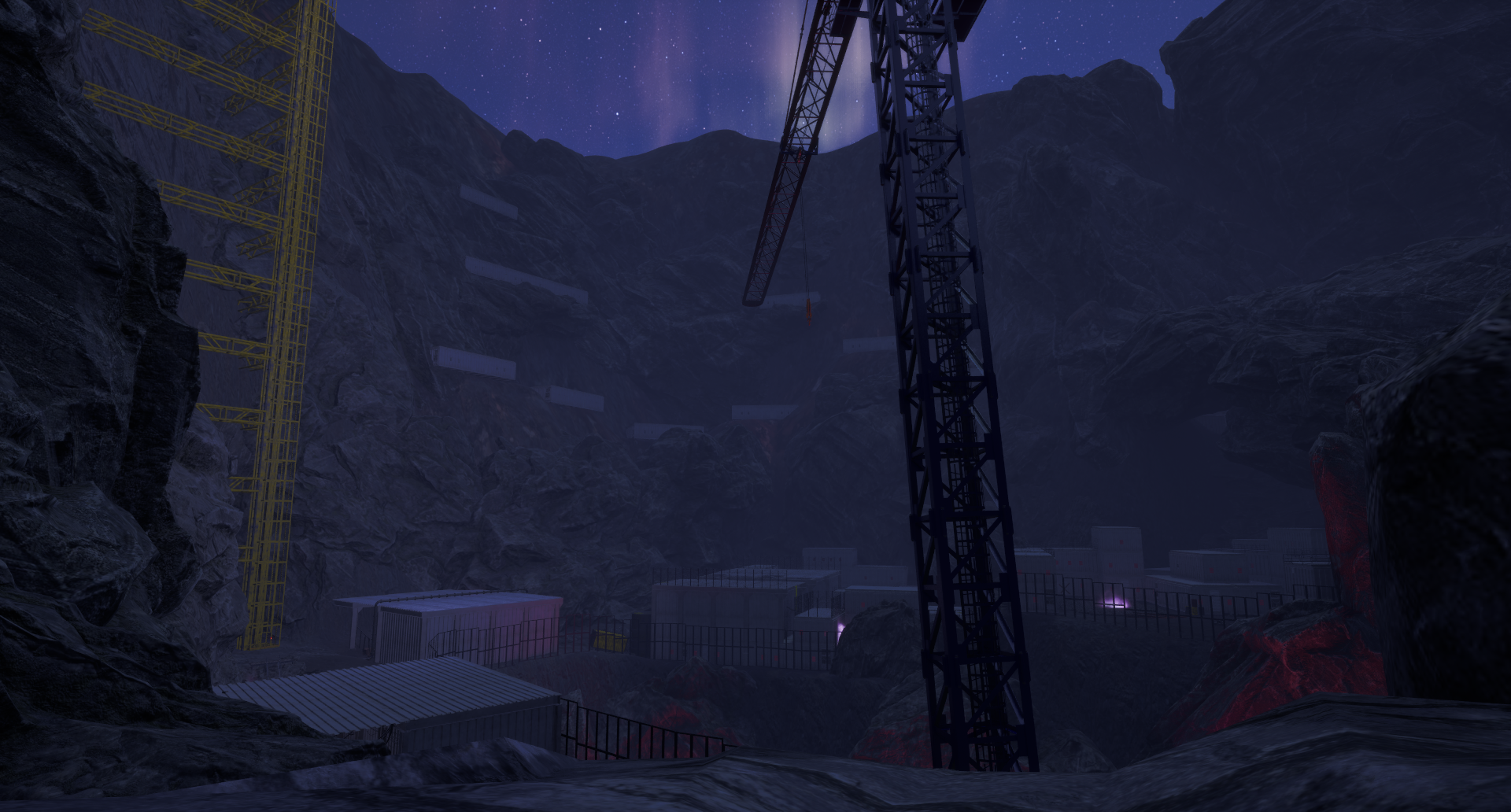
Upon reaching a plateau, the player is presented with a vista that reveals the wider playable space. The yellow elevator mounted to the cave wall is deliberately placed and colour coded to function as a visual focal point, presenting a potential way out.
This moment establishes the player’s long-term goal to leave the mine, while the elevator becomes a mid-term goal, helping to maintain player motivation.
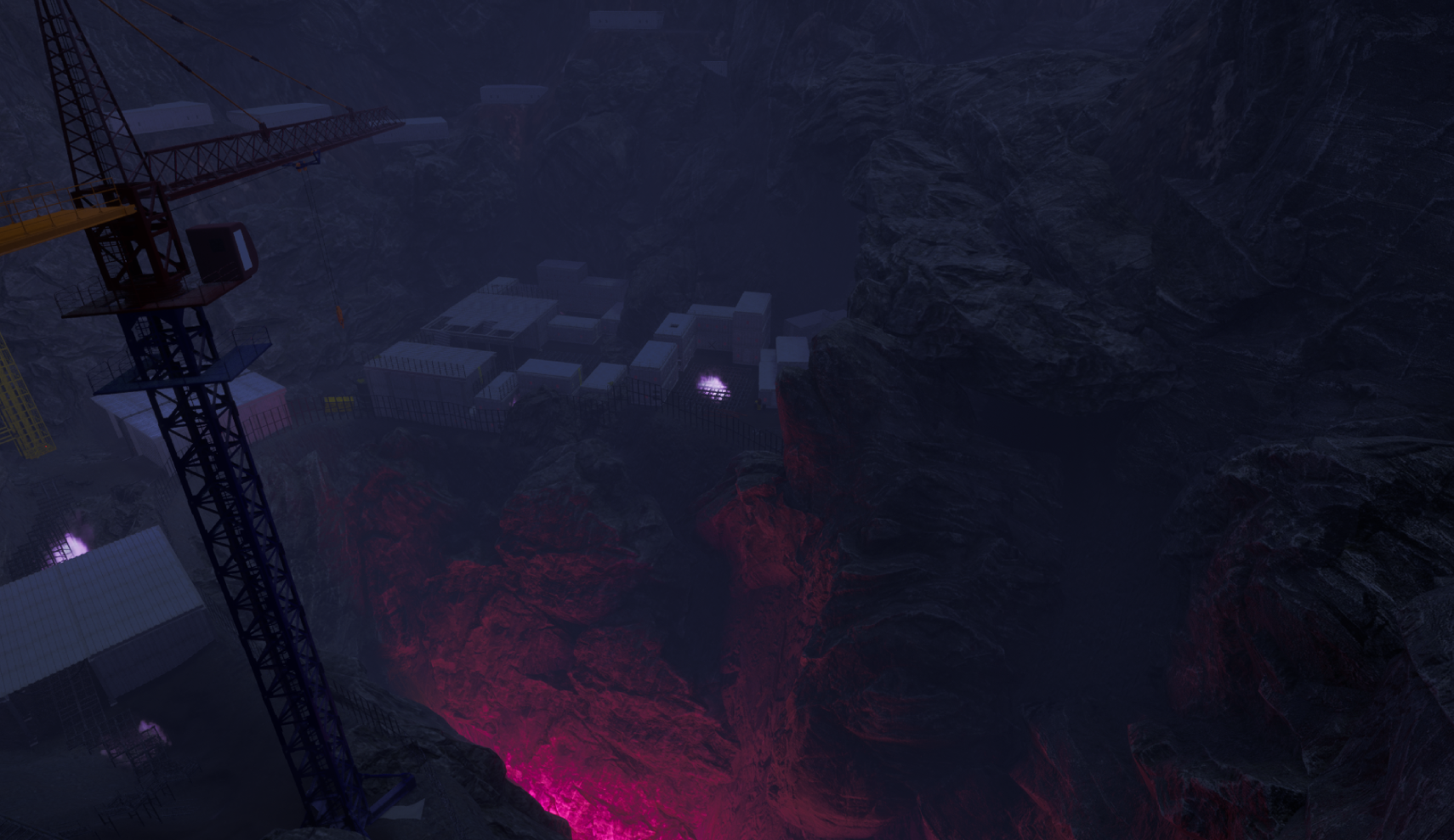
The vista also incorporates a tower crane, placed as a soft leading line, directing the player’s attention toward future areas of exploration as well as the central caver.
A mysterious light shines up from the cavern, adding to the atmosphere while hinting at a significant space the player will encounter later.
One way
The player is funneled down a steep slope, creating a one way transition that reinforces forward progression. Upon reaching ground level, the player can inspect the central cavern up close, allowing for a more detailed view while still withholding critical information. This controlled reveal builds anticipation.
As the player continues, environmental elements such as fallen objects and blocked pathways are used for navigation, restricting movement while guiding the player along the intended path. These obstacles function as diegetic barriers, maintaining immersion while supporting clear and readable boundaries.
Almost There
The player encounters a short traversal sequence that requires crouching under obstacles and jumping over gaps, introducing light movement based challenges.
These traversal elements contribute to the theme of abandonment, using environmental storytelling to suggest decay.
This section is designed to encourage player engagement, while also allowing the player to observe their surroundings. Using the 30 seconds of fun philosophy by presenting a repeatable gameplay loop using core mechanics.
A Mission
Maintenance Required
After crossing a broken catwalk, the player reaches the elevator. The player's expectations are intentionally subverted, as the elevator has no power, preventing immediate progression.
The discovery of a nearby power source with missing components establishes a new mid-term goal: locating the missing parts.
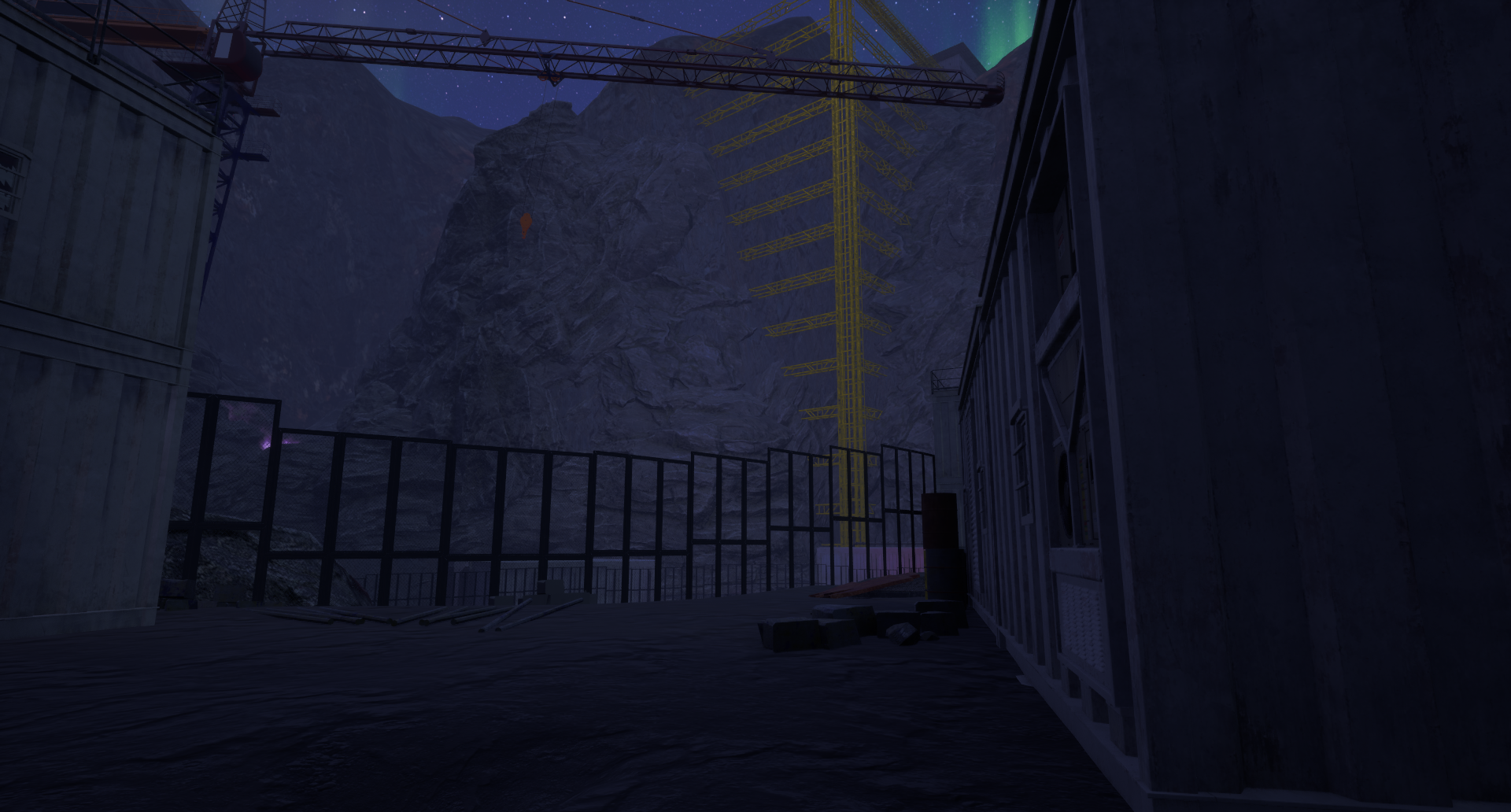
As the player explores, they pass fenced-off areas and fallen boulders, which restrict access while maintaining immersion.
To guide progression, cargo containers use the same color coding as the elevator, subtly directing the player toward the intended path.
UP And Down
Exploration leads the player to discover ladders, introducing a new mechanic with environmental onboarding. By requiring the player to climb multiple ladders, the level provides a safe space to teach controls.
The player drops down into abandoned barracks, where environmental storytelling is continued through scattered debris. From here, the player descends to the bottom floors.
At the base, a broken wheel is deliberately positioned and colour coded to function as a visual focal point, drawing the player’s attention and signalling its importance. This use of placement supports intuitive interaction without explicit instructions.
Spare Parts
Continuing forward, the player encounters a space with multiple environmental hazards, requiring them to navigate carefully, timing jumps to avoid danger. This introduces hazard based traversal, combining movement and spatial awareness to create minute to minute gameplay challenges.
As exploration continues, the environment presents blocked and broken pathway, intentionally placed to encourage active problem solving.
Bittersweet
After collecting the last required item, the player is able to progress by navigating up and over the barracks, creating a looping path that returns them to the power source. Allowing the player to revisit a familiar area with a clear understanding of the layout.
Along this route, the player passes inaccessible areas, which are intentionally designed as foreshadowed spaces for potential future exploration.
Upon returning, the player activates the power source, completing the mid-term goal. However, this success is immediately subverted by a scripted cinematic event, where the elevator breaks, falling apart and scattering debris.
This both adds to the narrative while also teaching the player of the instability of the environment. The level concludes with an open ended resolution, suggesting that the story will continue in a future chapter.
Production
PRE:Production
Before starting this project, I had already decided that the experience would be designed from a first person perspective, with the theme of a psychological mystery. This decision was made to maximise immersion and emotional intensity, as a first person perspective reduces player detachment and strengthens suspense.
With this in mind, the pre-production focused on how to effectively utilise first person spatial design, particularly in relation to visibility, scale, and narrative.
Due to the limited timeframe, I defined gameplay beats, goals, and key features. I chose to dedicate time to create a solid pre:production to help guide me through the remaining production.
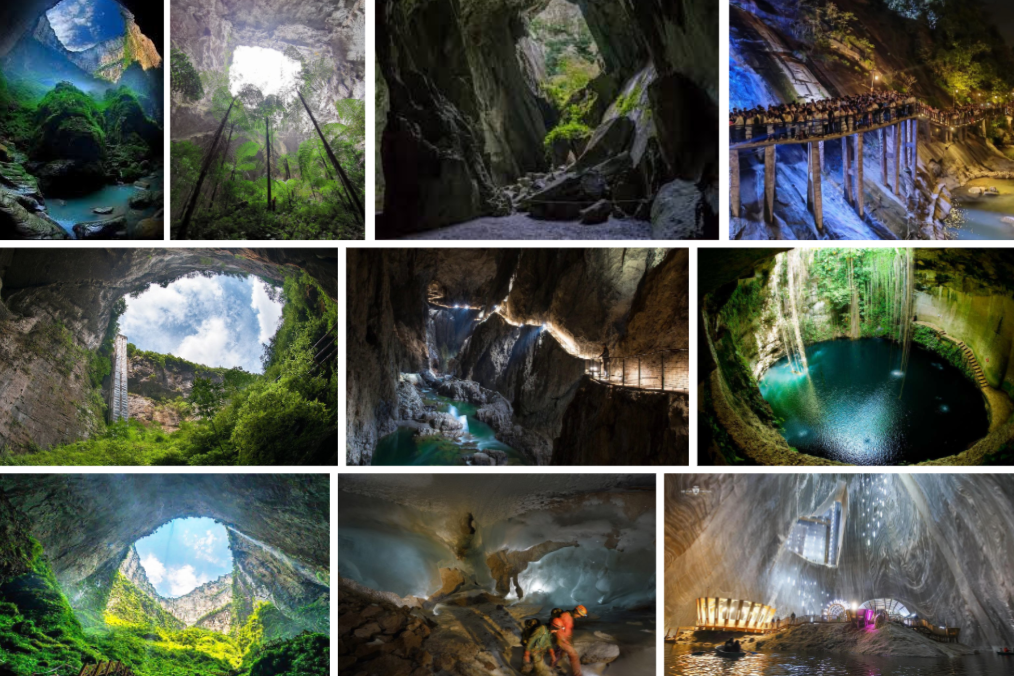
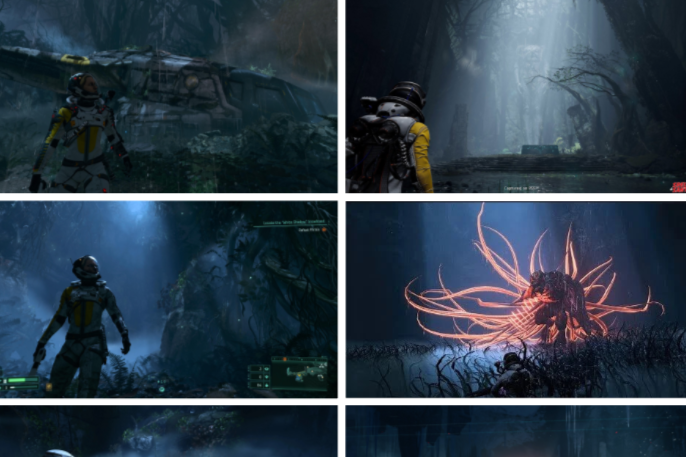
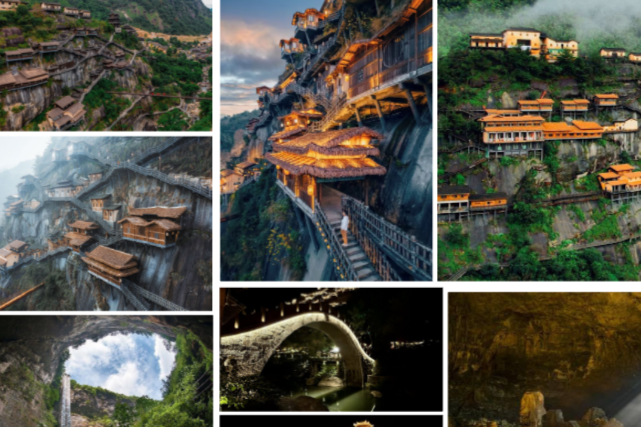
Once the theme, perspective, and beats were established, I gathered references for a moodboard, drawing inspiration from other games and real world environments which helped to establish atmosphere, tone, and visual identity.
Paper Design
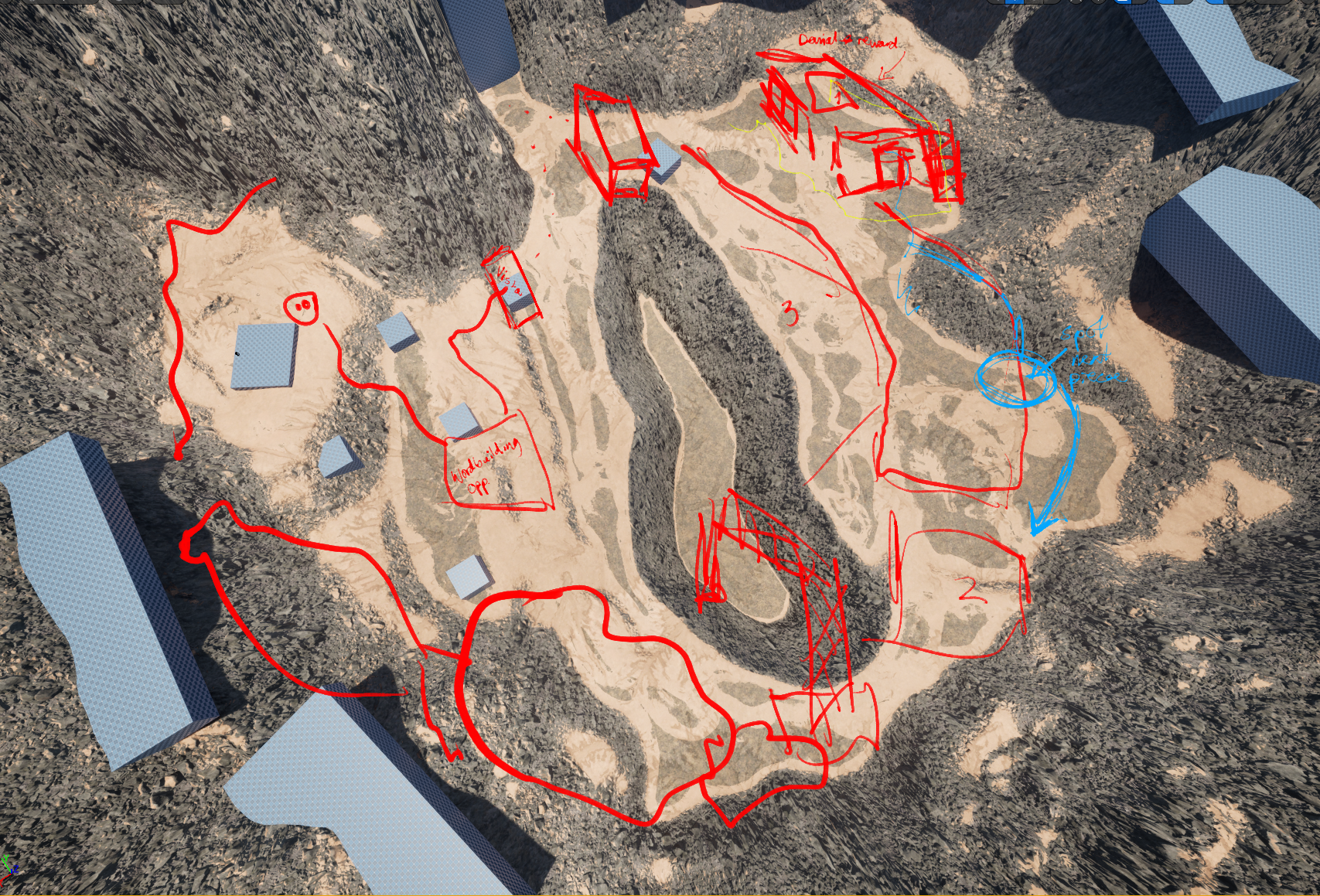
Rather than beginning with a traditional top down drawing, I started the design process by roughly sculpting terrain. Using the terrain as a foundation, I created a paintover, applying simple geometric shapes to visualise player paths, composition, and key areas.
This approach allowed me to quickly start iterating and spend time on environmental design and world building.
Blockout
After a thorough pre-production phase, I began blocking out the level, using simple geometric shapes to establish and test scale and proportion. This allowed for fast iteration on the size and layout of the map before building to more detailed structures.
I utilised a modular asset pack by building structures. The modular structures helped me to reuse buildings, with slight variations. The repetitive design of the barracks fit well with the environmental storytelling and space being an abandoned mining site, as these structures could be either workplaces or living quarters.
Throughout the level, I implemented one way paths to control progression in the linear experience. In some areas I added a version of an hourglass layout, where tighter spaces transition into wider areas that allow for exploration. This balance helps the player feel a sense of agency while preventing the level from feeling overly restrictive.
Although the level is minimalistic in its current state, this is a deliberate decision to support future gameplay. The open spaces are designed to function in combat scenarios, allowing players the freedom to run, hide, or engage in combat. This forward thinking approach ensures that the layout remains flexible and scalable for future iterations.
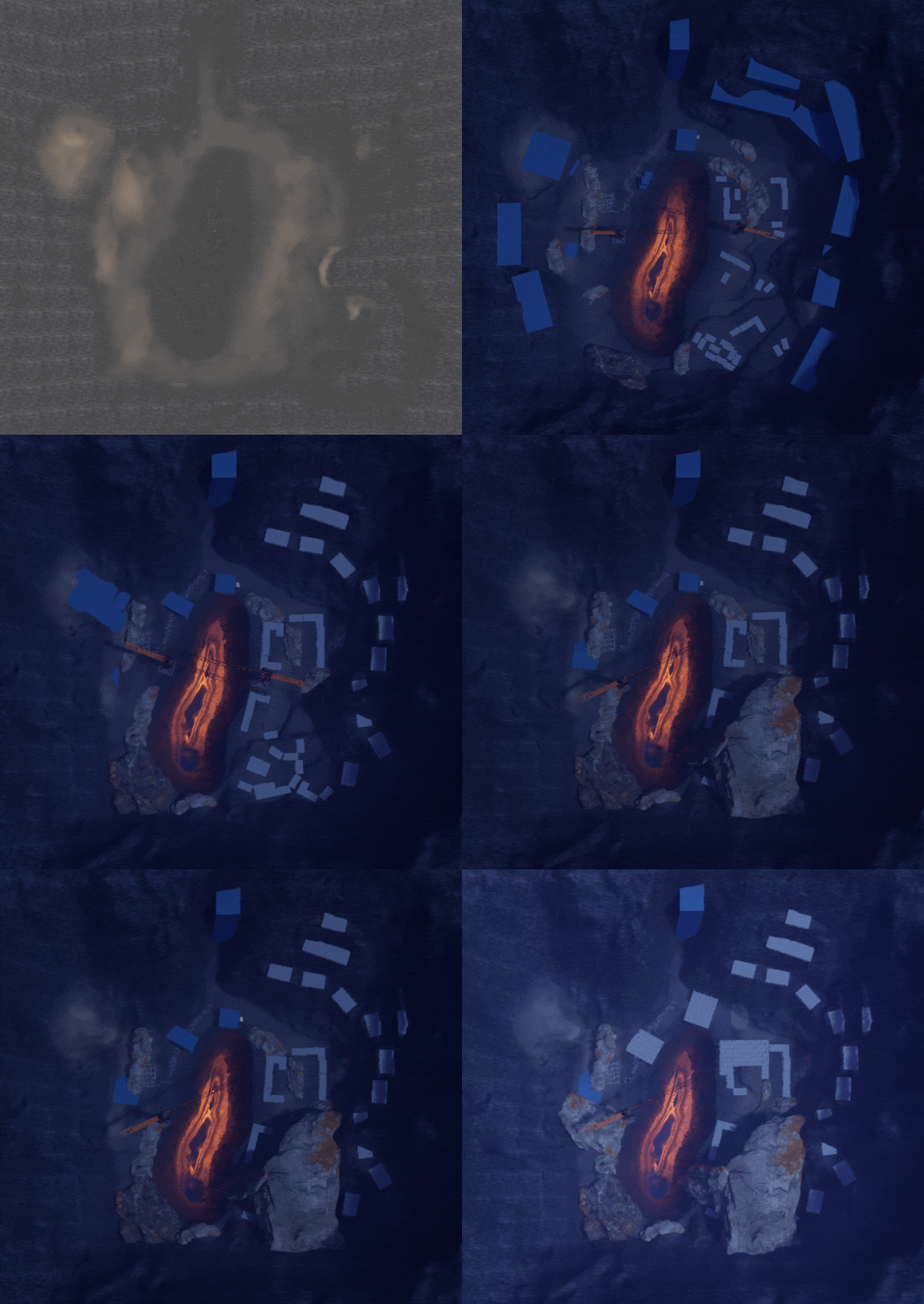
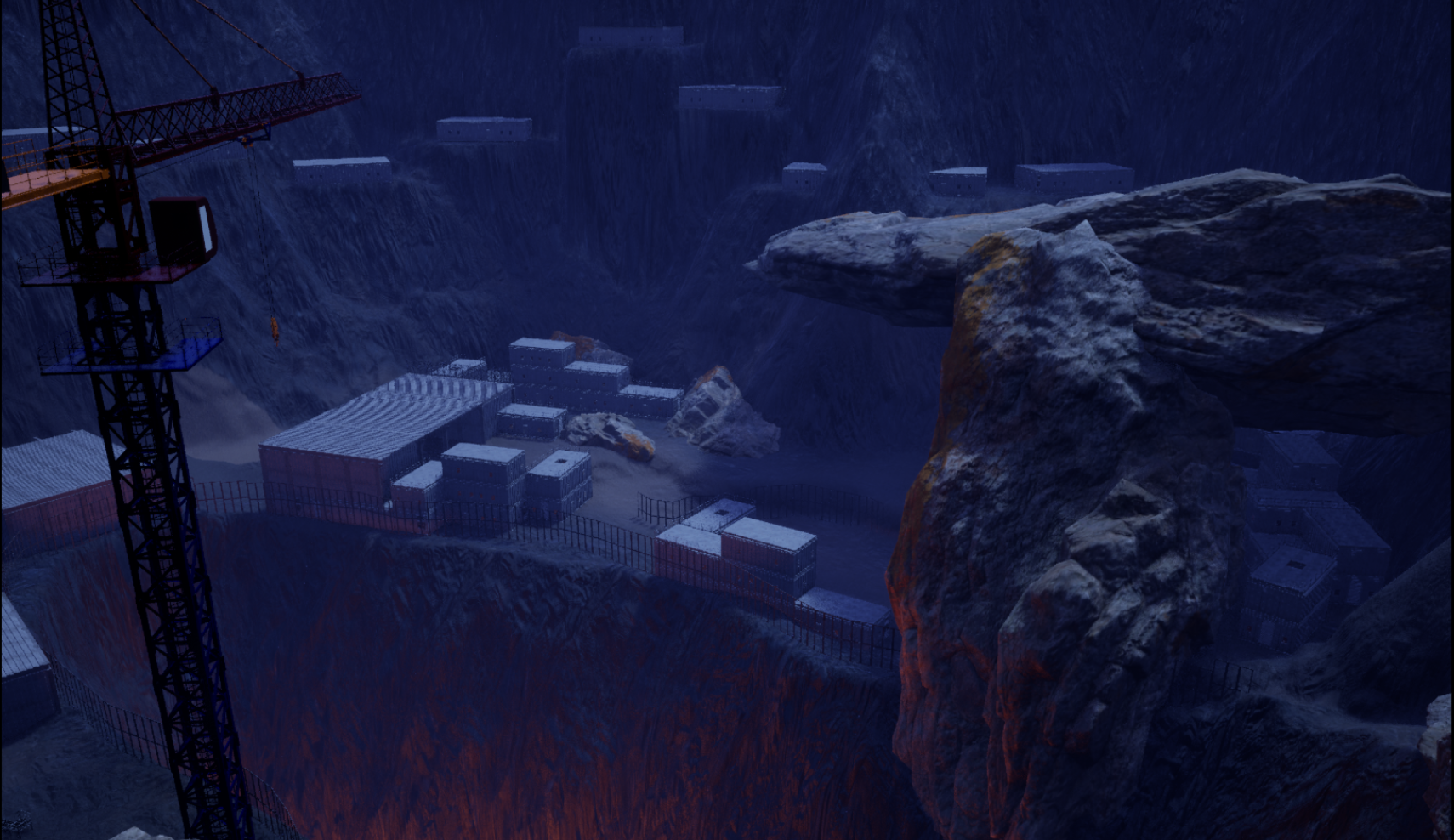
Example of iteration from mid production to end product.
Reflections
One of my goals with this piece was to design a space where a natural environment is the focal point, using atmosphere to create authenticity.
Given more time, I would have expanded this level into a second chapter, allowing the player to further explore the environment under new circumstances. Building on the established layout, this continuation would shift the experience from isolation to tension and threat. Familiar areas may become hazardous, requiring the player to stay alert and to not become reliant on the already established logical rules of the environment.
Overall, this project allowed me to explore level design with a strong focus on atmosphere, environmental storytelling, and player immersion. I was able to share my passion in creating cohesive environments while considering how levels can evolve over time to support ongoing player engagement.